Showing posts with label Chiropractors in Downey. Show all posts

Tuesday, August 18, 2015

GROW YOUR OWN ORGANIC NATURE CURES

The best way to ensure you and your family and friends only consume organic, untainted and nutrient-rich foods is to grow your own herbs, fruits and vegetables. This can be done in the smallest of plots or even on a balcony, roof garden or windowsill with a raised box or pots and other types of planters. Outside , fences, railings and walls can be utilised with canvas pocket planters, mounted boxes and hanging baskets etc.

A very good way to grow food, especially for those less able, is to have raised beds built. These can easily be made from old pallets and can be two or three feet high to provide an easily accessed planter even for those that are wheelchair bound. If these beds are surrounded with gravel and sharp sand paths it will also deter garden pests like slugs and snails. Protect the wood used for planters using wood treatment made from natural linseed oil which has excellent preservative properties and water resistance and is harmless to wildlife and humans.

PLANNING YOUR ORGANIC FOOD GARDEN

When planning a garden it is important to add as many native plants as possible to support the local wildlife and beneficial insects and bees that will pollinate the herbs, fruits and vegetables you want to grow. Filling your outside space with alien species simply for their looks or colour is a sorry waste of valuable space that could feed native flora and fauna as well as your family and friends.

Growing plants from seeds is very rewarding and, during the first year, seeds can be collected from home-grown plants and are therefore free. Always purchase organic seeds.

The easiest edible plants to begin growing are bell peppers, chilli peppers, broad and runner beans, herbs, peas, strawberries, sunflowers and tomatoes. These can all be grown in  pots or other containers. In small spaces use a large container or pot with a cane tee pee to grow beans and peas along with sweet peas to help attract pollinating insects.

Potatoes are a good first crop when growing directly in the soil as they will break up the soil and add nutrients future grown vegetables will require.

What many consider as weeds are often very powerful medicinal plants, such as nettlesand dandelions. Grow them in a container to stop them spreading. See the Herbs and Spices page for more plants that can be used medicinally.

Certain plants should be avoided in the home and garden, if there are animals or young children around, as they are poisonous. See Nature Cures For Pets.

FEEDING THE PLANTS

It is important to feed your plants once they are established to gain the most nutrients. These nutrients come out of complex organic matter as soil bacteria breaks it down and are then taken up by the plants.

Chicken pellets: These have a high nitrogen content and are a good all round soil improver. Fresh chicken manure must only be added to a compost heap whilst the dried and heat treated pellets can be added to the soil around most fruits and vegetables especially  leafy crops like cabbage, celery, salad crops as well as courgettes, fruit bushes, potatoes, rhubarb and sweet corn.

Fish blood and bone meal: Blood meal provides nitrogen and does not take long to break down. Fish meal provides nitrogen and phosphorus and potassium and bone meal provides mainly phosphorus with some nitrogen and calcium. It is a good all round fertiliser for fruit bushes and trees, herbs and vegetables and should be added to the soil early in the year before plants become vigorous with leaf growth.
Manure: All types of animal, and even human faeces, are excellent soil improvers as the soil microbes break them down and release the nutrients which then feeds the plants. However, it is important to only use manure that comes from organically reared animals as the antibiotics and other chemicals used in farming can be absorbed by plants and then consumed by humans. Fresh manure must be rotted in a compost heap for twelve months before using on plants. Well rotted manure can be used to improve the soil before planting and as a mulch after plants are established.
Seaweed and kelp: This is a very useful fertiliser for mulching plants with as it also deters aphids, slugs and snails as well as greatly improving the soils nutrients. It is always best to keep mulch away from direct contact with the stems of plants.
Water: Rain water is always best to use for vegetation as it contains many of the nutrients they require so it is a good idea to install water butts on all available drainpipes. Installing an irrigation system is an economical way to water plants as it can work on a timer at night and a humidity sensor can control it and it can also be connected to water butts. This means that plants will always have all the water they need with no effort required. Drip feeds on the soil are best as spraying water loses much to evaporation and can burn the leaves of plants if done during hot sunshine.

GARDEN PESTS

A bird feeding station is important to attract birds as these will consume many garden pests such as caterpillars, slugs and snails.

A pond is a valuable asset as it too will encourage the wild life that can help to control pests. Frogs, dragonflies, damsel flies, newts and toads will consume many of the unwanted garden pests encountered in a vegetable, fruit and herb garden.

COMBINATION PLANTS FOR PEST CONTROL
The following plants will protect against the aphids and other bugs that can attack the mentioned vegetables.
  • BASIL: tomatoes
  • CHIVES: sunflowers and tomatoes
  • LEEKS: carrots
  • MARIGOLDS: tomatoes
  • MINT: broccoli, Brussel sprouts, cabbage, carrots, cauliflower, kale and tomatoes
  • NASTURTIUMS: beans, broccoli, Brussel sprouts, cabbage, cauliflower, kale and peas
  • SPRING ONIONS: carrots
ANTS, APHIDS, BLACK FLY, GREEN FLY, SPIDER MITES AND WHITE FLY
Aphids can attack a wide variety of plants depending on their species. Many will thrive upon beans, cabbage, cucumber, melons, peas, potatoes, pumpkin, squash and tomatoes. Green aphids thrive on on roses, grey ones on brassicas, black ones on broad beans and white ones on box hedges.
Ants protect aphids as they feed on the honeydew aphids produce so must also be removed. Control ants by trimming the lower parts of the plant so that they do not touch the ground and give ants easy access. The use of an organic aphid control pesticide, such as neem oil, will take care of the ants as well. Vinegar can help to remove the trails ants leave to use as a pathway to their feeding places. Dilute a tablespoon of vinegar with water in a sprayer and spray on to the pathways they use near to vegetables. 
Spider mites thrive upon asparagus, beans, melons, squash and other cucurbits, peas, tomatoes and strawberries, as well as several weed species. The same methods can be used to remove them as with aphids.
Attracting the following beneficial insects to the garden is a natural way to kill aphids and spider mites. One ladybird will consume 5000 aphids during its year long lifetime.
Raised bedsTomato basket
cane teepee

garden pond
A pond creates a balanced habitat for wildlife in the garden.
  • ASSASSIN BUG (Reduviidae)
  • BIG EYED BUGS (Geocoris)
  • DAMSEL BUG (Nabidae)
  • DAMSELFLY (Zygoptera)
  • DRAGONFLY (Anisoptera)
  • ENCARSIA WASPS (Encyrtidae)
  • GALL MIDGE (Aphidoletes aphidimyza)
  • HOVERFLY (Syrphidae)
  • LACEWING (Chrysopidae)
  • LADYBIRD (Hippodamia convergens, Coccinellidae, ladybugs)
  • MINUTE PIRATE BUG (Anthocoridae)
  • PARASITIC WASPS (Trichogrammatidae)
  • PRAYING MANTIS (Mantodea)
  • SOLDIER BEETLE (Cantharidae, leatherwing)
  • STINK BUGS (Pentatomidae)
Nearby plantings of the following will help to attract these beneficial insects to your garden, if left to flower, as many insect predators also consume pollen..
  • CARAWAY
  • CARROTS
  • CELERY
  • CORIANDER
  • COW PARSLEY
  • DANDELION
  • DILL
  • FENNEL
  • GOLDEN MARGUERITE
  • LOVAGE
  • MINT
  • PARSNIPS
  • PARSLEY
  • YARROW
Planting of the following plants that are attractive to aphids are good for organic aphid control. Growing these in a separate space from fruit and vegetables will lure aphids away.
  • ASTER
  • BEGONIAS
  • CHRYSANTHEMUMS
  • COSMOS
  • DAHLIAS
  • GERANIUMS
  • HOLLYHOCKS
  • LARKSPUR
  • ROSES
  • VERBENA
  • ZINNIA
Chives, garlic and onions will also help to deter aphids as they do not like the odour.
Stinging nettles can be used as an aphid killer. Soak half a pound of nettles in a bucket of water for a week, before straining and using undiluted to control aphids.
Adding a very small amount of washing up liquid to a sprayer filled with water can be used to wash off aphids and other pests that attack some vegetables without contaminating the vegetables and fruits but should only be used very sparingly for vast outbreaks because it will also kill the beneficial insects. A few aphids will not cause too much damage and are part of the balance of a healthy vegetable garden. Rubbing them off with the fingers or plain water in a powerful sprayer is the often enough to keep them at bay.
CARROT FLY
Carrots can be grown in a container that is more than two feet deep such as a plastic refuse bin as carrot flies cannot fly higher than two feet above the ground. Cut some holes in the bottom of the bin then add a layer of stones or broken pots for drainage. Then add sieved stone free soil and top with a good potting compost before sowing your organic carrot seeds. Grow some spring onions around the edges to provide even more protection.
SLUGS AND SNAILS
When disposing of snails it is pointless to simply throw them into your neighbours garden as they have a homing instinct and will return the next night. Never use salt to kill slugs and snails as this causes them great pain for some time before they die.
BEER TRAPS: Slugs and snails are attracted to beer so a small jar half filled with beer will trap and drown them so that they can be disposed of on the compost heap or a bird table.
COFFEE GROUNDS: These can be sprinkled around plants as a safe deterrent but do not use too often.
COPPER: Slugs and snails get electric shocks from copper so it is a useful tool to stop them getting near to your vegetables. Self-adhesive copper bands can be used around pots and planters.
DIATOMACEOUS EARTH AND SHARP SAND: Diatomaceous earth comes in the form of a chalky powder, and is the natural fossilised remains of diatoms, a type of hard-shelled algae. Both this powder and sharp sand make a good barrier to slugs and snails as they can not easily cross it if it is sprinkled around vegetables or planters and raised beds.
ELECTRIC FENCE: Small electric ribbons which run off a nine volt battery can be purchased and set up around vegetables. When a slug or snail comes in contact with the fence, it receives a mild static sensation that is undetectable to animals and humans. This does not kill the slug but causes it to look elsewhere for forage.
GRAPEFRUIT AND FLOWERPOT TRAPS: Place half a grapefruit skin or a flower pot upturned near to your vegetables with a small stone to raise one side. This will attract slugs and snails which can be disposed of the morning. The grapefruit scent attracts them so is often a better solution. A wide plank can be used in the same way as slugs and snails will use it for shelter during the day.
LAVA ROCK: Lava rock can be used as a barrier around plantings, but should be left mostly above soil level, otherwise dirt or vegetation soon forms a bridge for slugs to cross.
SEAWEED: Seaweed has the added benefit of adding nutrients to the soil if used as a mulch around vegetables. Pile it on 3" to 4" thick - when it dries it will shrink to just an inch or so deep. Seaweed is salty and slugs and snails avoid salt. Push the seaweed away from plant stems so it's not in direct contact. During hot weather, seaweed will dry and become very rough which also deters the slugs.
WATERING SCHEDULE: If watering is only done in the early morning the soil dries out by the time snails and slugs become active at night. This can reduced slug and snail attacks by 80%.

Friday, August 14, 2015

Take Care with Skin Care!

We often hear about reducing our carbon footprint.   How about reducing our chemical faceprint?  J
It’s well-known that the skin, the largest organ of the body, easily absorbs whatever is applied to it.  So, besides being diligent about what we put INTO our bodies to digest, we may enhance our wellbeing further by paying careful attention to what we put ON our bodies.
Let’s take a quick look at the bad guys first.
 Many skin care products contain carcinogenic (associated with cancer) ingredients, and here’s a partial list:
Petrolatum
BHT
Titanium Dioxide
Triethanolamine (or TEA)
DMDM-Hydantoin – formaldeyde releaser
Polysorbate 80 and Cetareth 20 (associated with the carcinogenic 1,4-Dioxane)
Diazolidinyl Urea – formaldehyde releaser
Fragrances
Some items are associated with other conditions like dermatitis, nerve damage, hormone disruption:
Methlisothiazolinone
Phenoxyethanol
Propylene Glycol (a component of antifreeze, along with Butylene Glycol )
EDTA
See Sodium hydroxide in there? This is lye (drain cleaner).
Unfortunately, even some “natural” and “organic” brands of skin care products often contain 1,4-Dioxane, although this ingredient is not listed on the labels.  There IS a way to get around that, however – simply look for ingredients containing  ‘myreth,’ ‘oleth,’ ‘ laureth,’ ‘ceteareth,’  or any ‘eth’!  Those are products to avoid.
Now, how about the good guys?  In other words, what can we use?  This will be your question when you’ve gone through the labels of so many skin care products.  Are there really any totally pure products that will improve my “chemical faceprint”?
Not many, but some! 
Our Number One recommendation is an online company that makes wonderful body balm from ONLY grass-fed beef tallow, olive oil, and pure essential oils.  Check out the link for yourself at www.vintagetradition.com   
It is easy to make your own facial moisturizer from a combo of almond, avocado, olive, and sesame oils, with a little lavender or other essential oil for fragrance.  (Call us for the recipe proportions) As with the Vintage Tradition products, a little goes a long way, so you seldom have to bother with replenishing your supply.
As second best, there are a few companies who don’t use parabens and certain other no-no’s listed above.  When you shop, check the ingredients carefully, and choose the one with the fewest ‘bad guys.’ Some of these companies are Alba Botanical, Avalon, (not Avon!) and Aubrey.  There may be others.  

All the best in your quest!  Any feedback you have for us is welcomed.  Call us at (562)861-3896

Friday, August 7, 2015

NUTRITION KIT FOR KIDS

healthier-meals
It is every parent’s dream to have strong, healthy children who grow up into strong, healthy adults. Given the sad truth that our fast-paced culture of “instant everything” is combined with continual toxic bombardment, is this goal attainable? Normally, YES! – with your investment of time and “know-how.”
So, parents and grandparents, are YOU prepared for the next school year?
It’s really pretty simple.
The biggest tool in the kit, of course, is to eat (and serve!) a whole foods diet, and eliminate as much as possible the processed convenience food products.
This fundamental step also takes the most work, because it requires diligent supervision of what is eaten – by yourselves as well as by your children. You will need to commit to buying whole food groceries and then cooking and serving them – each week. You’ll become an expert at reading and quickly analyzing the “Ingredients” list of any product before purchasing. You will strategize a plan for making lunches for school and work, rather than relying upon others to feed you non-nutritive meals during the day.
After that, the rest is easy!
Have a good source of pure, filtered drinking water, and encourage lots of water drinking, preferably between meals
Engage in a do-able and sustainable exercise program – individually or as a family
Keep a few basic tools in the form of whole food supplements on hand, as follows:
Cataplex B tablets: The whole B complex nutritionally supports the body in maintaining good brain health. Unfortunately, the standard American diet is low in these nutrients. Physical problems like chronic exhaustion or hyperactivity, and emotional difficulties with anxiety, anger, nervousness, or fears may be indicators that more B complex nutrition is needed.
Calcium Lactate (tablets or powder): Everyone requires a good supply of bioavailable calcium in their daily intake. “Growing pains,” joint and muscle aches, chronic colds and ear infections, trouble concentrating - these all may indicate that bioavailable calcium is needed. Most calcium supplements require 12 digestive steps in order to be metabolized. Calcium Lactate takes ONE step, as it is made from fermented vegetables instead of inedible substances like coral or rocks. Pasteurized dairy products contain calcium that is bound into a much less digestible form, therefore difficult to fully absorb – therefore we suggest supplementing with this excellent product.
Congaplex capsules: This is a combo supplement that supports the body’s work with its immune function. Great to have on hand to help you get through the cold season.
There’s your basic nutrition tool kit!
To have a more customized program for your child (or yourself), come in for a nutrition appointment with Susana. Many of our patients consider this a back-to-school essential! Our bodies are as individual as our faces, and have their own specific needs and challenges.
For appointments, please give us a call at (562) 861-3896

Tuesday, August 4, 2015

Our Patients SPEAK!


"...I am so pleased to find a substitute from regular meds. I have always reacted to drugs and found little help. Now Im off allergy meds and shots, and I feel so much better. I've also lost weight." -Nancy G.
"...I love my experience here! Ive seen many medical doctors that couldnt help me!... " -Martina B.
"...I enjoy every visit. I am always heard out and attended to, and have learned a lot about what to eat and what not to eat. Thank you for taking care of me & my girls! - Michelle Z.
 "...I just want to say Thank You for all your help. Many times through the years I have not been the perfect patient. However,I know that my health today is in result of your care, work, and love. You all are the best!" - M.R.
"...Nutrition Response Testing is the only way to go! Healing vs. cover-up." - C.B.

Friday, July 31, 2015

HPF - Happy Patient Feedback!

feed
This person drove past our clinic frequently for 10 years. When he recently saw the new sign on our door, he decided to check us out. Here are his words:
"I came in feeling desperate about my health. I felt better after the first visit, and better each week thereafter. I wasn't sure this type of treatment would work, but I am sure now!"
Great decision to walk into Thropay Health Center!
We don't "cure" anyone - but we support your body's inborn ability to heal and maintain itself.
The old saying, "Prevention is better than cure" is never more applicable than with cancer. Since the statistics of breast cancer are so high (potentially one in three women), we'll look at some preventive ideas for breast care that should assist your body in its hard work.
[To our male readers: Please don't stop reading! Most of these suggestions are helpful for YOU, too - plus, you can pass them on to a special lady in your life.]
These tips are based upon information from an article in Medscape, May 6, 2015.
- stay off synthetic hormones, and use bioidentical hormones only when totally necessary
- quit smoking (if you do) and begin exercising. Exercise reduces the risk of B.C. by 35%.
- get all highly processed/refined fats out of your life - such as "vegetable oils," spreads, margarine, shortenings, and store-bought salad dressings. Replace with butter, extra-virgin olive oil, or high-lignan flax oil. For cooking, use coconut or avocado oil
- eat plenty of organic vegetables and fruits daily - be sure to frequently include kale, beets, greens, carrots, Brussels sprouts, and broccoli
- use chlorine filters for drinking, cooking, and showering water
- drink no or little alcohol, and avoid Tylenol - your liver is frontline for cancer prevention
- be out in the sun and take an unrefined cod liver oil supplement - get lots of vitamin D
- ladies - wear a bra for less than 12 hours daily - cuts your risk of B.C. in half!
- if B.C. is in your family, come and be evaluated by Susana to see what further steps you can personally take to assist your body in maintaining good health
Your feedback is valuable to us! Respond to this email, or call us at (562) 861-3896.

Wednesday, July 29, 2015

Analyze your ANS


rendering of character with magnifying glass
There is no end to the wonders that are built into the human body. We are "pre-programmed" to survive - no matter what! Even against the most frightening or discouraging odds, our bodies cling to life.
In order to achieve this major goal, we have each been given an incredible system for managing and healing injuries and for maintaining the function of all the basic systems that spell L-I-F-E to the body.
This amazing master/director is called the Autonomic Nervous System (ANS).
The ANS is composed of three branches:
1) Enteric - sometimes called the "gut brain," because it manages every aspect of digestion
2) Para-sympathetic - responsible for repair, restoration, relaxation, and maintenance
3) Sympathetic - the "fight-or-flight" branch that goes into gear when you need an immediate rush of energy to handle a sudden emergency. It will direct blood and energy to the heart, lungs, and muscles to help you run from danger, for example.
Normally, and for good health, the para-sympathetic and enteric branches dominate the sympathetic branch. They continually support the brain and central nervous network, plus the digestive system. Digestion is basically inhibited by the interruption of the sympathetic function, but that is always intended to be temporary. The other two branches resume "business as usual" when the emergency is over.
When dominance between the para-sympathetic and sympathetic branches is too frequently reversed, our health suffers.
Therein lies one reason for the many health problems in this fast-paced culture. The continual stresses we encounter every day trigger the constant activation of the sympathetic system at a low level. This subjugates and impedes the important action of the parasympathetic and enteric systems. Several undesirable things can happen in this situation of imbalance:
- poor food choices are often made to manage the stress, such as caffeine, alcohol, sugar and so-called comfort foods
- enzyme production and activity can decrease
- over-production of cortisol in the brain, which affects digestion
- gut bacterial balance may be thrown off
- immune system response can be affected by the digestive woes
Each item on that list means trouble!
There is plenty of help, however. Many of you receive periodic Heart Rate Analysis tests, which reveal the ANS balance/imbalance in YOUR body Dietary counseling, whole food supplements and herbs can all make a big difference in helping your body get back on track.
We're here to help! Call us for an appointment at (562) 861-3896

Tuesday, July 14, 2015

Oversee your Omega-3's

Print
As we've all heard, our bodies require Omega-3 fatty acids for good health. Fortunately, these are bio-available from several well-known foods - but they often occur in small amounts. That means we need to focus on getting enough Omega-3's by regularly consuming as many of these foods as possible.
For those who are concerned about the Omega 3-Omega 6 ratio, some of these listed foods do contain both types. However, it makes sense to me that natural foods that are organically grown (or from grass-fed animals) are not a health hazard. Omega-6 fats from artificial, refined food products cause the damage.
Here are some Omega-3-containing foods to consciously, regularly add to your intake:
Wild-caught oily fish, such as salmon
Flaxseeds (freshly ground) and flaxseed oil
Walnuts
Chia seeds, Pumpkin seeds
Green leafy vegetables, including kale, spinach, parsley, mint
Broccoli
Cabbage
Brussels sprouts
Eggs from pastured chickens
Grass-fed cattle meats
Raw milk and raw cheese from grass-fed cows
Microalgae
Dr. Russell Blaylock tells us that Omega-3 fatty acids bring quite a number of health benefits. There are other contributing factors to good health, as well, but this is a great start. Here is a partial list:.
Aid in the prevention of preeclampsia ( sudden hypertension during pregnancy), premature births, depression, autoimmune diseases, arrhythmia, cardiovascular disease
Modulate anger, anxiety, fear, bipolar disorder
Protect the brain - of babies, children, and adults
As you pursue the goal of optimum health, please remember to include a variety of these Essential Fatty Acids (EFFs) foods in your daily diet.
Call us anytime at (562) 861-3896

Thursday, July 2, 2015

HAPPY 4TH OF JULY CELEBRATION!

banner-page-bbq
Hosting a barbecue this Saturday? Here's an easy make-ahead recipe for a colorful salad that everyone loves - especially the non-lettuce eaters!
GREEN NO-LETTUCE SALAD
Dressing:
1/2 cup organic white wine vinegar
1 cup olive oil
1 tsp. sea salt
1/3 tsp. freshly ground pepper
1/2 tsp. organic dry mustard
1 clove organic garlic, minced
1/2 cup chopped curly parsley (no substitutes)
Combine all ingredients in a jar with a tightly-fitting lid. Shake vigorously. Chill until ready to use. Shake again before using. (If the olive oil consolidates, take out the jar from the refrigerator about 15 minutes before you need it.)
Salad:
2 cups organic carrots, thinly sliced
2 cups organic celery, thinly sliced on the diagonal
1 cup organic Persian cucumbers, thinly sliced
1-2 cups organic cauliflower, thinly sliced
1/2 organic red onion, quartered and thinly sliced
1 pint organic grape tomatoes
1/4 cup chopped curly parsley
In a large bowl, layer all vegetables except parsley. (Be sure they are sliced thinly - it makes a big difference in the salad.) Cover and refrigerate several hours, or until well chilled. To serve, shake dressing and add to vegetables. Toss gently to mix well. Turn into a chilled bowl, and sprinkle with parsley.
*********************
From all of us at Thropay Health Center, have a memorable holiday! Keep safe, and remember to eat healthfully all weekend!
Our number is (562) 861-3896

Monday, June 15, 2015

Dr. Thropay's Household Products

download
ARE YOU BEING POISONED BY YOUR DAILY ROUTINE?
A typical morning for many people might include: Wake up to a digital alarm clock, wash hands with antibacterial
soap, wash face with a special cleanser, brush teeth with Crest or Colgate, take a shower with
scented gel, shampoo with a popular scented shampoo and matching conditioner, put on a moisturizer or
sunscreen, spray on perfume or cologne, apply make-up – foundation, blush, mascara, and lipstick. Before
even leaving the house for work, a person can be exposed to a multitude of harmful chemicals, dyes, and
colorings! These items can cause serious damage to the nervous system of one whose immune system is
struggling, and even in a healthier person can hinder the ability to achieve optimal health. But there are
great options for reducing and/or eliminating this potential threat to our health. Although we can’t control
general pollution out there, we can choose products that do not compromise our personal environments.
The following are suggested:
Toothpaste FLOURIDE FREE - Tom’s of Maine • Nature’s Gate • Jason’s
Body Soaps Jason body wash • Shikai Shower Gel
Shampoo Any natural coconut oil based soaps scented with natural oils
Kiss My Face • Jason • Alba
Lotions Pure coconut oil • Dr. Bronner’s • Kiss My Face • EccoBella
Nail Polish Remover Almost Natural Polish Remover
Make-up Origins by Macy’s • Aubornne • Hemp Naturals Lip Tints
Skin Care Dr. Hauschka (very expensive) • Origins by Macy’s • Avalon moisturizer • Alba
Perfumes None at all, or pure, high quality essential oils
Hair Dyes Naturcolor (need a hair stylist willing to work with you)
Trionics (non-toxic colors or perms) available online
Hair Sprays Any non-alcohol from natural stores, e.g. Aloe 80 Organics
Shaving Cream Tom’s of Maine shaving cream
Deodorant Lavilin • Tom’s of Maine
Feminine Hygiene Natracare • Organic Essentials (Trader Joe’s) • Seventh Generation
(all the above have no-chlorine cotton pads and tampons)
Bubble Baths Try Seventh Generation dishwashing liquid – great for kids!
www.athropay4health.com • 562 l 861 l 3896 • 11425 Paramount Bl. Downey, CA 90241
Sink Cleansers Bon Ami
Dishwashing Soap Seventh Generation • Trader Joe’s Next to Godliness
Spray Cleaners Distilled white vinegar mixed w/ water • Planet spray cleaner • Mr. Clean’s Magic Erasers
Candles Aroma Naturals essential oil candles (non-toxic, lovely smell)
Toilet Bowl Cleaners Seventh Generation
Wood Floors Ecover Wood Floor Soap
Hand Soap Buy empty dispensers – use ½ Dr. Bronner’s and ½ water mix
Laundry Soap Ecos • Seventh Generation • Oxi Clean (if necessary for whitening)
Ecover non-chlorine bleach • Trader Joe’s laundry soap
Room Sprays Mia Rose Air Therapy (Trader Joe’s) • Clean Air citrus room sprays
Essential oils diluted with water
AVOID:
Tap water. Get a good filtering system for drinking water, and a chlorine filter for your shower head(s). Use
rubber gloves for hand washing dishes and clothing
Bottled water from plastic containers, large or small. Stainless steel bottles for toting your daily drinking
water are much preferable. Or, better yet, look for glass bottles at Dollar stores, although these are less
convenient to carry.
Aluminum and Teflon cookware. Use glass or stainless steel cookware.
Chemical room sprays such as Lysol. These are extremely toxic to both skin and lungs.
Digital and atomic clocks. Old-fashioned wind-up clocks and watches are preferable – no EMF radiation.

Friday, May 29, 2015

The Harmony of Health

74239a8ba80ec127c4a3111cc98eafce
Dr. Earl Powell wrote the following:
"Music is said to be the universal language of mankind. It has charms to soothe or to arouse the deeper feelings of the soul. Music stirs that inner something in man that can set him dancing. a lullaby will soothe an infant to sleep.
Birds sing and animals caper to rhythm...Even the heart beats in rhythm when health abides.
Do you know that health, like music, comes also from within? Health requires the normal expression of life through the medium of the nervous system, and there must be harmony in this relationship."
Dr. Powell's analogy makes the nervous system the "conductor" of our body's "orchestra." The major sections of instruments would be bones, muscles, glands, and organs. The conductor directs theses instruments by means of communicating fibers that pass through openings between the spinal vertebrae and spread in a vast network throughout the body.
Just as a conductor knows when even one instrument is out of tune or plays a false note, so our nervous system is immediately aware when a body "instrument" fails to render a true tone. If this situation continues, it affects the other "players," and the harmonious music of good health becomes disharmony.
Fortunately, we have learned the various interferences that cause our body instruments - and our conductor! - to falter. These may be one or more of the following:
- Structural misalignments (vertebrae and joints)
- Scar tissue not correctly healed at the deeper level
- Allergic reactions to foods
- Toxicity from heavy chemicals or heavy metals
- One or more immune challenges - bacteria, fungus, virus, or parasites
It is one thing to detect a problem and inform the patient what it is. A medical facility will diagnose a condition and then "try" a drug or do an invasive procedure, both with the same goal of eliminating the symptoms.
We at Thropay Health Center believe that we do much better than that! We have natural, non-invasive solutions to help the body correct itself at the root cause.
When the body resolves its own problems, harmony is restored and the orchestra plays a rich, joyful song of HEALTH!
If someone you know needs his or her body harmony restored, don't hesitate to call us. Many clients here have found that their health improved far beyond their expectations!
Our number is (562) 861-3896

Wednesday, May 27, 2015

"Sweets to the sweet!"

Q. What types of sweeteners do you recommend?

A. You have no doubt heard that many scientists and professionals say, "Sugar is sugar; it doesn't matter where it comes from, it has the same effect."  We respectfully disagree, because we believe the body is smarter than that.  Our clinical experience shows that the human body greatly differentiates between natural and artificial or over-processed products.  

Therefore, as with all foods that make up a health-promoting diet, it comes down to one basic question to ask ourselves:  Is this sweetener a truly natural, unrefined product that retains the original minerals, vitamins, fiber, and phytonutrients? 

Here is a simple YES and NO list to make it easy for you.  (Of course, you are welcome to research these products if you have the time and inclination :)  And the one caveat, maybe the one "element of truth" in the above popular quotation, is that sweet foods should always be eaten in limited amounts.

YES

- raw, unfiltered honey produced in spring or summer from flower nectar. This is our Number One choice.  Unfortunately, some of the honey production in America is corrupted in the off-season months by feeding bees processed sugar and/or keeping light on the hives 24 hours.  Ask questions!

- dates

- organic fruit 

- natural stevia plant you grow yourself

NO

- HFCS (high fructose corn syrup) - found everywhere!

- Agave nectar = not even "raw, organic" - this is a highly processed product

- Chicory syrup - a "cover" for agave syrup

- Stevia powder 

- evaporated cane juice

Next week, we'll talk about the various sugars that are advertised as better choices than refined white sugar.

And, as always, your comments and questions are welcome!

Call us at (562) 861-3896

Thursday, May 21, 2015

Sweets - Part 2


Wishing everyone a happy and healthy Memorial Day weekend!

Last week we listed the two ends of the sweet spectrum, giving Yes and No lists to help you make good choices and avoid bad ones.

But what about the "in-betweens," of which there are many?  How do we sort out the OK's from the "iffys"?  This can be confusing, especially with regard to sugar made from sugar cane, which is a natural plant containing the perfect balance of nutrients (and fiber) that is always found in nature.

I'm sure you've noticed the wide variety of sugar products available now:  Organic sugar, raw sugar, Muscovado, Turbinado, Demerara, Piloncillo, Sucanat - and more!  In addition, there are "other" sweeteners such as coconut sugar and maple syrup.

Just as with the Yes and No lists, it basically comes down to the production of these items. We're looking for the least possible amount of interference with the composition and nutritional value of the original plant.  This means very simple processing with few steps and no chemicals used.  Not surprisingly, the best products by this standard come from small farmers, as opposed to big commercial enterprises who will sacrifice much for the big bucks.

Before I list these in preferable order, let me re-emphasize the caveat from last week.  Using a nutritionally superior product is an excellent start down the road of improving one's health.  But because virtually all of us have been addicted to sugar-sweetened items from birth (or before) it is very important that we back off from that situation, and strive for the goal of "requiring" much less sweetness in our diet.  That factor alone will make a big health difference.  So - please use these products in strict moderation.  Set your own goals and work towards them consistently.

OK to use moderately - these items appear to be the least processed:

- Rapunzel Organic Whole Cane Sugar - very similar to Piloncillo in Mexico, Panela in Colombia, and Raspadura in Brazil

- organic coconut sugar

In this OK category I also put organic maple syrup, which is made simply by the boiling down of tree sap and yet retains some nutritional value and is usually chemical-free.  The price alone will ensure that you use it moderately!

Iffy - this group has been processed with more steps, separating the molasses from the sugar crystals - then re-combining them in unnatural proportions - and including a clarifying process which is often done with chemicals:

Sucanat - while the clarifying  process might be omitted, there is still the separation of crystals and molasses

Muscovado, Turbinado, Demerara, "Organic Raw Sugar" (which is not raw) are all similar and fit into the Iffy group

If you have any questions or comments on this subject, please feel free to share them with us at this email address.

Only one more week of our May promo - a bonus 15 minutes added to your full-hour massage!  Call for your appointment at (562) 861-3896

Monday, May 18, 2015

Simple Salads for Spring

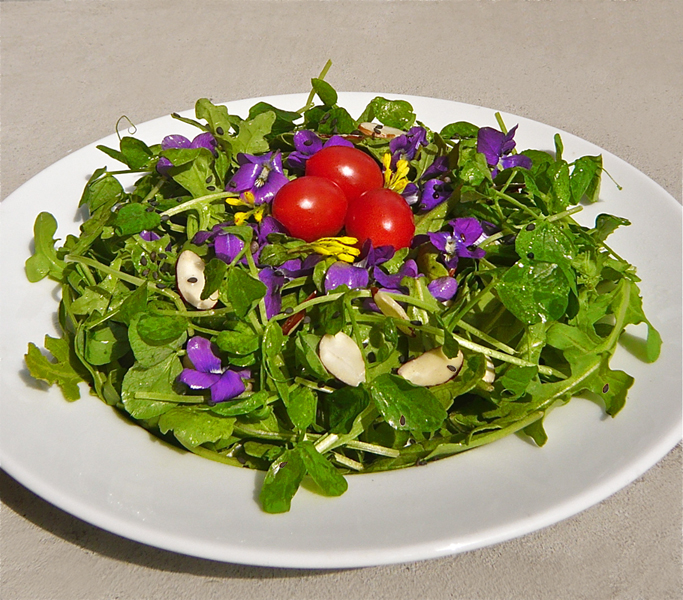
spring-salad-violet
When there's no time to grocery shop, it's your chance to get creative. A "throw-together" salad can be attractive as well as delicious and nutritious. Here's a simple recipe that can be varied as to ingredients or amounts, according to whatever you have in the refrigerator.
4 cups organic broccoli florets (or cauliflower, or both)
1 cup of cubed raw milk cheese - cheddar, Swiss, Gruyere - or 1/2 cup raw milk blue cheese, crumbled
1-2 red organic apples, washed and chopped but not peeled
1/2 cup organic red onion, sliced thinly and quartered
2/3 cup raw pecan pieces - or any nuts or seeds you have on hand
Add 1/2 cup chopped celery, if desired
Combine in a large bowl. Drizzle with the following vinaigrette, and toss until coated.
2 tbsp. organic red wine vinegar
1 tbsp. organic lemon juice
1/4 cup olive oil
1 clove organic garlic, minced
dash of cayenne
1 tsp. organic Italian seasoning
1/2 tsp. sea salt
1/2 tsp. fennel seeds - optional
Place all vinaigrette ingredients in a small jar and shake well before tossing with salad.
***********************
Kitchen Q&A
Q. What about Orgreenic fry pans? Are they a healthful choice for cooking?
A. They test very well here, and are hands-down far superior to "regular" non-stick pans (which are a potential source of plastic and/or aluminum particles).
We have found that they are wonderful for re-heating food, sauteing veggies, or cooking omelets or potatoes - always no higher than low-medium heat. I have heard one complaint about cooking raw meat - that it stuck very badly and the pan was miserable to clean. If any of you have input on this, please share it. :)
************************
A last reminder about our special offer on the 21-day Purification Program Kit from Standard Process! The 15% off will apply through March 31st. Call us to order your kit(s) at (562-861-3896.

Tuesday, April 28, 2015

News on Nutraceuticals

best-superfoods-300x200
A prominent news health editor wrote a well-publicized news article this week entitled "Are Your Vitamins Killing You?" His basic point was that dietary supplements will not make you healthier, and may actually increase your risks of disease.
Is this true? You may be surprised at my answer. Within certain parameters, there is an element of truth in his premise.
Before you stop reading in amazement or disgust, please consider the following comments.
Notice the words "an element of truth." The most believable presentations often mix truth with fiction to achieve some credibility with a larger number of people. We have to establish the definition(s) before we can sort out the true from the false.
Here is the "element of truth." The vast majority of vitamins or supplements that are available today are artificial, chemically produced to imitate some substance in nature. Their so-called "active ingredient" is isolated and multiplied many times more than it ever occurs in a natural food. No nutrients that normally accompany this factor in food are included. For these reasons, the "supplement" is actually foreign to the body, not recognized as food, and often goes out undigested. In that case, supplements do not make a person healthier, and in some instances as quoted, they may increase the risks of disease.
We call such products "nutraceuticals," because they are so aligned with pharmaceuticals - in their manufacturing process, the flawed principle behind their composition, and in their frequent failure to produce better health. And yes, there are a few research studies - all using nutraceutical products - that prove that "vitamins" don't work.
Don't get me wrong, though. There are multitudes of research studies that prove the abysmal failure of the far more toxic and dangerous pharmaceuticals to produce health or decrease risk of disease. The negative results quoted in the news article.about supplements are completely dwarfed by comparison! There's an all-too-common pattern of one drug being followed by another and another in the attempt to counteract "side effects," resulting in a downward spiral of the patient's health.
There is good reason why at Thropay Health Center we use concentrated whole-food supplements by Standard Process. From soil to supplement, these products are primarily organically grown foodsthat retain their natural balance of nutrients. Using the complete food gives much better "bang for the buck," because nutrients working together accomplish better and greater benefits than isolates that require multiplied amounts in order to "work."
As so many of our patients can attest, the results in promoting health are nothing less than phenomenal! It's important to understand, too, that we can't rely upon supplements alone for our health. Dietary changes, removal of present toxins, natural exercise, and watchful maintenance are all big players in the journey to better health.
Just one more week for our April promo! Elvira has been giving free 20-minute massages to those who referred someone new this month. Thank you for your referrals!
Call us anytime at (562) 861-3896.