Showing posts with label downey best chiropractor. Show all posts

Friday, July 31, 2015

HPF - Happy Patient Feedback!

feed
This person drove past our clinic frequently for 10 years. When he recently saw the new sign on our door, he decided to check us out. Here are his words:
"I came in feeling desperate about my health. I felt better after the first visit, and better each week thereafter. I wasn't sure this type of treatment would work, but I am sure now!"
Great decision to walk into Thropay Health Center!
We don't "cure" anyone - but we support your body's inborn ability to heal and maintain itself.
The old saying, "Prevention is better than cure" is never more applicable than with cancer. Since the statistics of breast cancer are so high (potentially one in three women), we'll look at some preventive ideas for breast care that should assist your body in its hard work.
[To our male readers: Please don't stop reading! Most of these suggestions are helpful for YOU, too - plus, you can pass them on to a special lady in your life.]
These tips are based upon information from an article in Medscape, May 6, 2015.
- stay off synthetic hormones, and use bioidentical hormones only when totally necessary
- quit smoking (if you do) and begin exercising. Exercise reduces the risk of B.C. by 35%.
- get all highly processed/refined fats out of your life - such as "vegetable oils," spreads, margarine, shortenings, and store-bought salad dressings. Replace with butter, extra-virgin olive oil, or high-lignan flax oil. For cooking, use coconut or avocado oil
- eat plenty of organic vegetables and fruits daily - be sure to frequently include kale, beets, greens, carrots, Brussels sprouts, and broccoli
- use chlorine filters for drinking, cooking, and showering water
- drink no or little alcohol, and avoid Tylenol - your liver is frontline for cancer prevention
- be out in the sun and take an unrefined cod liver oil supplement - get lots of vitamin D
- ladies - wear a bra for less than 12 hours daily - cuts your risk of B.C. in half!
- if B.C. is in your family, come and be evaluated by Susana to see what further steps you can personally take to assist your body in maintaining good health
Your feedback is valuable to us! Respond to this email, or call us at (562) 861-3896.


Tuesday, July 7, 2015

CALLING FOR CALCIUM

images
In the past few years, we've been hearing a lot about calcium and the important role it plays in the human diet.   Sometimes, though, calcium is demonized because of negative symptoms that can appear in those who take calcium supplements.

So, where is the truth in this seeming paradox?   

It's pretty simple, actually.  What our bodies require is calcium in a form that it can USE to meet its many demands for this essential mineral.  That usable form is called "calcium bicarbonate."  The "bi" part of the word helps us remember that this calcium is already bioavailable for the body's use.

On the other hand, there are plenty of calcium supplements out there that are in the "calcium carbonate" form.  This means the calcium they contain is NOT readily available for the body.  In fact, it takes twelve biochemical steps for the body to break it down, and by that time, only a small portion of the calcium is useful.

Knowing that contrast, you can understand why there is this dichotomy about calcium supplements out there. 

Calcium carbonate supplements are often made from coral or chalky rocks.  Who would  choose to chew on coral or a chunk of rock, even if we had the teeth for it? These are not foods, and therefore not good sources of calcium.  Much of the calcium from these supplements ends up either excreted in the urine or deposited in various ways.  Arterial plaque build-up, kidney stones, cataracts, bone spurs - these all consist of calcium that has not been utilized by the body. 

Calcium Lactate, by contrast, is in calcium bicarbonate form, made from fermented vegetables (actual foods!).  The fermentation process acts as a type of pre-digestion, so the calcium is readily usable by the body - in a one-step process.  This means that the much lower number of milligrams per tablet in Calcium Lactate will do a better job than the high-mg.12-step calcium carbonate supplements.

Growing pains, muscle cramps (and angina, because the heart is a muscle), hyperactivity, osteoporosis, and low immunity all point to calcium deficiency.   And, as you know, the typical western diet does not supply nearly enough of it. 

The result is that most of us require calcium supplements in order to re-stock the body with what it has been missing for years.  Of course, the other half of the equation is to eat a NON-typical diet - one that contains plenty of usable calcium. 

Great dietary sources include raw milk (not pasteurized) and raw cheese, almonds and Brazil nuts, sesame and flax seeds, kale, broccoli, spinach and other leafy greens.

Standard Process has been making Calcium Lactate supplements for 65+ years.  They are one of our most popular products, and very reasonably priced.   Call us anytime so we can have your supply ready for you. 

Thursday, June 18, 2015

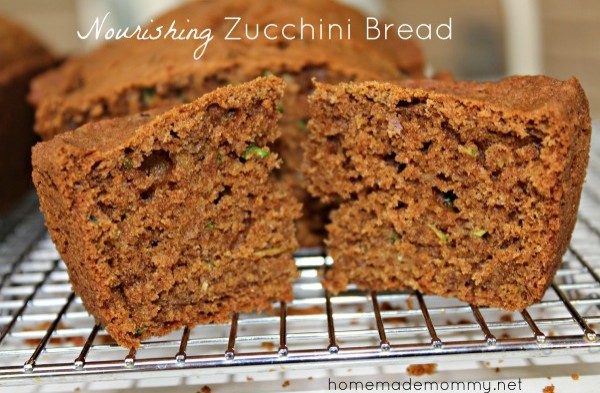
No-grain Zucchini Bread

Nourishing-Zucchini-Bread-600x393
With zucchini "cropping" up abundantly these days, we steam it, stir-fry it, and make soup with it - and then we look for creative ways to use the extra portions of this healthful vegetable.
Here's a simple and tasty gluten-free recipe that will please anyone's palate. Serve it to your children with an omelet for brunch, or use it for a "dessert-y" way to get another vegetable into them!
This makes a medium-sized loaf, and the recipe can be doubled.
1 cup shredded organic zucchini
1 ripe organic banana, mashed
4 free-range eggs
2-3 tbsp. raw honey
1 tbsp. coconut oil
1/2 cup organic coconut flour (Trader Joe's carries it)
3/4 tsp. baking soda
1/2 tsp. sea salt
2 tsp. cinnamon
1/2 tsp. nutmeg
1/2 cup chopped raw walnuts (optional)
Place the shredded zucchini in a mesh-type strainer and let stand for 5 minutes.
Heat oven to 350.degrees. Grease a 7 1/2 by 4 1/2 inch loaf pan with coconut oil or plenty of butter.
In a large bowl, mix the eggs, honey, oil, and mashed banana together.
Gently press the zucchini against the strainer to drain out the liquid. Add it, plus all the dry ingredients, to the bowl. Stir all together until smooth. Add nuts if preferred.
Pour batter into the greased pan and bake for 45-50 minutes. Check with a toothpick inserted all the way to the bottom/center of the loaf. If it comes out clean, the job is done! Otherwise, bake a few minutes longer.
Cool before removing from pan. May be served warm or cold. Keep leftovers refrigerated.in a sealed container.
*********************
Just a couple of days left until Father's Day! Be sure to stop by to pick up a gift card for Dad. Many guys love Elvira's robust therapeutic massages, or you can choose our nutritional or chiropractic services.
HAPPY FATHER'S DAY to all dads, grandfathers, uncles, friends!
Thropay Health Center
11425 Paramount Blvd.
Downey, CA 90241
(562) 861-3896

Monday, June 8, 2015

Chew for your life!

chewing-blonde-fruit-bowl
In the "good old days," we were told as children to chew our food 25 times...40 times...even 100 times per bite. This became a dinner table game, which actually reinforced the concept in a fun way.
There was a lot of value in that advice!
Chewing food thoroughly is actually the first step to proper digestion. The stomach is able to perform its part well when the food has first been mechanically broken down finely in the mouth and infused with saliva to create a digestible mush.
We get in the habit of gulping our food as quickly as possible and rushing on to the next event. But short-cutting the step of thorough chewing is an invitation to digestive problems...and even a waste of money and resources.
For example, raw vegetables (as in salads or veggie trays) are some of the most challenging foods for the stomach and GI tract to digest. Plants have a cellulose wall around every cell. If that protective barrier is not broken down mechanically, all those wonderful nutrients will pass through unabsorbed, for the most part - depriving us of their nutritional benefits.
Chewing food well also helps prevent acid reflux by reducing the volume of food in the stomach at any one time.
Taking time to properly chew food will enhance our lives with better health AND the relaxation benefits of a slow-down break in our busy-ness.
****************
June is "Pamper Dad" month! Give a special man the gift of a massage for Father's Day. We have gift cards available that you can purchase - your choice of a half-hour or full-hour - and we will honor the card for up to three months.
Write us here or call us at (562) 861-3896

Tuesday, June 2, 2015

An easy way to boost your health

download
Most people think of massage as a luxury, a great way to pamper yourself or someone you love. This is true, of course. But did you know that a regular program of therapeutic massage is known to bring many health benefits? Put that with the luxury of pampering yourself, and you've got a winner!

These health benefits can include the following:

- Enhanced immunity
- Reduced depression and anxiety
- Increased benefit from athletic work-outs
- Relief of migraine pain and frequency
- Improved sleep quality
- Improved mobility, and less pain in arthritis sufferers
- Brightening complexion and hair
- Reduced PMS symptoms
- Enhanced alertness
- Better concentration

Many of our patients wisely choose to have a weekly or monthly massage from Elvira, our massage therapist extraordinaire. Elvira's talented hands, along with her training, experience, and dedication all combine to consistently bring her rave reviews. We are delighted that she is part of our team!

Our massage prices are amazingly affordable. Only $40 for a one-hour massage, or $25 for a half hour. This is one of the most reasonable ways to improve your health and help you manage your stress load. Gift cards are available in any denomination.

Call us for a convenient appointment at (562) 861-3896.

Friday, May 29, 2015

The Harmony of Health

74239a8ba80ec127c4a3111cc98eafce
Dr. Earl Powell wrote the following:
"Music is said to be the universal language of mankind. It has charms to soothe or to arouse the deeper feelings of the soul. Music stirs that inner something in man that can set him dancing. a lullaby will soothe an infant to sleep.
Birds sing and animals caper to rhythm...Even the heart beats in rhythm when health abides.
Do you know that health, like music, comes also from within? Health requires the normal expression of life through the medium of the nervous system, and there must be harmony in this relationship."
Dr. Powell's analogy makes the nervous system the "conductor" of our body's "orchestra." The major sections of instruments would be bones, muscles, glands, and organs. The conductor directs theses instruments by means of communicating fibers that pass through openings between the spinal vertebrae and spread in a vast network throughout the body.
Just as a conductor knows when even one instrument is out of tune or plays a false note, so our nervous system is immediately aware when a body "instrument" fails to render a true tone. If this situation continues, it affects the other "players," and the harmonious music of good health becomes disharmony.
Fortunately, we have learned the various interferences that cause our body instruments - and our conductor! - to falter. These may be one or more of the following:
- Structural misalignments (vertebrae and joints)
- Scar tissue not correctly healed at the deeper level
- Allergic reactions to foods
- Toxicity from heavy chemicals or heavy metals
- One or more immune challenges - bacteria, fungus, virus, or parasites
It is one thing to detect a problem and inform the patient what it is. A medical facility will diagnose a condition and then "try" a drug or do an invasive procedure, both with the same goal of eliminating the symptoms.
We at Thropay Health Center believe that we do much better than that! We have natural, non-invasive solutions to help the body correct itself at the root cause.
When the body resolves its own problems, harmony is restored and the orchestra plays a rich, joyful song of HEALTH!
If someone you know needs his or her body harmony restored, don't hesitate to call us. Many clients here have found that their health improved far beyond their expectations!
Our number is (562) 861-3896

Wednesday, May 27, 2015

"Sweets to the sweet!"

Q. What types of sweeteners do you recommend?

A. You have no doubt heard that many scientists and professionals say, "Sugar is sugar; it doesn't matter where it comes from, it has the same effect."  We respectfully disagree, because we believe the body is smarter than that.  Our clinical experience shows that the human body greatly differentiates between natural and artificial or over-processed products.  

Therefore, as with all foods that make up a health-promoting diet, it comes down to one basic question to ask ourselves:  Is this sweetener a truly natural, unrefined product that retains the original minerals, vitamins, fiber, and phytonutrients? 

Here is a simple YES and NO list to make it easy for you.  (Of course, you are welcome to research these products if you have the time and inclination :)  And the one caveat, maybe the one "element of truth" in the above popular quotation, is that sweet foods should always be eaten in limited amounts.

YES

- raw, unfiltered honey produced in spring or summer from flower nectar. This is our Number One choice.  Unfortunately, some of the honey production in America is corrupted in the off-season months by feeding bees processed sugar and/or keeping light on the hives 24 hours.  Ask questions!

- dates

- organic fruit 

- natural stevia plant you grow yourself

NO

- HFCS (high fructose corn syrup) - found everywhere!

- Agave nectar = not even "raw, organic" - this is a highly processed product

- Chicory syrup - a "cover" for agave syrup

- Stevia powder 

- evaporated cane juice

Next week, we'll talk about the various sugars that are advertised as better choices than refined white sugar.

And, as always, your comments and questions are welcome!

Call us at (562) 861-3896

Thursday, April 30, 2015

Beefing up your brain

How many times in how many years have we been urged to "cut back on" red meat - or eliminate it altogether from our diets?  Sounds familiar, doesn't it?  But is this advice viable?

For her PhD thesis, a student of psychiatry decided to perform a study to prove that increased intake of animal foods was toxic and would be associated with more mental disorders.  She randomly selected 1000+ women, ages 20 to 93 years for the study. Other groups of food - vegetables, fruits, beans, etc. - were included for comparison.
Her words:

"...the strongest correlation of mental health [not illness] was red meat intake.  Consistently, women who have less than the recommended intake of red meat seem to be in an increased risk for common mental disorders (like anxiety and depression) and bipolar disorder. Women only need a small amount - a palm-sized serving - three or four times a week."  Quoted from Am J Psychiatry.2010 Mar;167(3):305-11

This student was very surprised to find that her hypothesis about animal foods being toxic to humans turned out to to disproved instead of proved!  I wonder if she recommends eating red meat to her patients?  Hope so!

Red meat provides complete amino acids, zinc, iron, and omega-3 fatty acids - all nutrients that are important for preventing depression and anxiety.  

As always, we strongly encourage our patients to eat meat that has been naturally raised (pastured on real grass), without hormones, antibiotics or other chemicals that are administered to artificially fatten the animals.  When we eat meat from factory-raised animals, we get the "benefit" of the antibiotic residues they contain. This contributes to the huge antibiotic-resistant problem we now deal with.

Yes, organic meat costs a little more, but when we keep the servings smaller and eat it less frequently, as suggested by the author of the study above, it's a win-win situation.  And the flavor can't be compared!

For more information on handling anxiety, depression, and other conditions that hinder our health, call and ask for Susana.  She is always happy to share her wisdom and experience.

Our number is (562) 861-3896

Friday, April 10, 2015

Smoking thins a vital part of your brain, but quitting reverses the damage

Smoking thins a vital part of your brain, but quitting reverses the damage

smoking-brain-damage
The region of the brain that controls language and memory is thinner in smokers than the rest of the population, research has found.
by RevContent
Cigarettes may be damaging our brains as well as our lungs and cardiovascular systems, a new study suggests.
An analysis of 504 people has revealed that the cortex of a smoker’s brain is thinner than the same region in a non smoker – as you can see in the image above, where yellow represents a large difference between thickness, and the colour gets darker orange as the gap decreases.
And that’s not great, because the cortex is pretty important – it’s the outer layer of the brain, and is involved in vital functions like memory, language and perception. Previous studies have shown that a thinner brain cortex is associated with cognitive decline in adults.
However, it’s not all bad news – the study also found that quitting starts to partially, but very slowly, reverse the cortex damage.
“We found that current and ex-smokers had, at age 73, many areas of thinner brain cortex than those that never smoked,” said lead researcher Sherif Karama, a psychiatrist from McGill University in Canada, in a press release. “Subjects who stopped smoking seem to partially recover their cortical thickness for each year without smoking.”
But the damage may never be fully repaired, with the study showing that former heavy smokers who quit more than 25 years ago still have thinner cortices than people who never smoked.
This is the largest study ever conducted on cortex thickness and smoking, and it may help explain the link between cigarettes and neurological issues. Researchers already know that being a smoker increases the risk of cognitive decline and dementia, but it was unclear up until now exactly how cigarettes changed the structure of the brain.
The research involved 244 males and 260 females with an average age of 73. All of the participants had been examined in 1947 when they were children as part of the Scottish Mental Survey. And the team more recently analysed the volunteers’ health, behavioural choices and also used MRI scans to study their brain cortices.
Although the cortex gradually thins as people get older, the researchers found that smoking appeared to speed up this process. Even after adjusting for lifestyle factors such as sex and age, current and ex-smokers had significantly thinner regions in their cortices than people who had never smoked. The results have been published in Molecular Psychiatry.
“Smokers should be informed that cigarettes could hasten the thinning of the brain’s cortex, which could lead to cognitive deterioration,” said Karama in the release.
And even though the research shows that quitting is good, not starting in the first place is even better. “Cortical thinning seems to persist for many years after someone stops smoking,” Karama added.

Source:

Wednesday, March 25, 2015

The remedy is in the refrigerator!

20100129SAWG_fg07a
Is your gall bladder troubling you? You're not alone - it's a very common malady, ranging from dysfunction or infection to painful gall stones. These develop over time from a continued thickening of the bile - and yes, that is a nutritional problem!
Perhaps you are one of the millions who have already had their gall bladders surgically removed. In that case, the excruciating pain is gone, but the trade-off for that wonderful relief has been an extra load placed on your liver to try and compensate for the lack of the gall bladder's work. What caused the problem has not been addressed, so you, too, can benefit from these suggestions.
Here is a quote from Dr. Joseph Mercola:
"...If one does have gall bladder disease, whole beets are an excellent way to thin the bile and limit the risk of gall stones. Whole beets will thin bile the way paint thinner thins paint. It is quite consistent. There are some supplements...that do this.
I believe that one of the biggest crimes in modern American medicine, that nearly one million people each year undergo, is having gall bladders sacrificed on the altar of the surgical table. Nearly every one of these patients did not need their gall bladders removed. They just needed to thin out their bile and clean up their diet, and the body would have self-regulated and eliminated the problem."
Whew! That puts it straight, doesn't it?
He referred to supplements. Standard Process has two products made from concentrated whole beats - root, leaf, and juice - that they grow on their own farm. These we highly recommend for anyone who had, has, or wishes to prevent gall bladder disease. These would be taken in conjunction with frequently eating the beets.
Whole beets can be eaten steamed, roasted with olive oil, or made into smoothies. For a special treat, make up a batch of "BEAUTIFUL BEET SOUP" and enjoy some each day, hot or cold. The touches of ginger, orange zest, and cinnamon make this recipe so special.
3-4 medium beets (about 1 pound),scrubbed well
1 tbsp. olive oil
1 large organic onion, chopped
1 pound organic carrots, sliced
1 tbsp. fresh-grated organic ginger
1 large clove of organic garlic, minced
6 cups water or organic vegetable broth
1 tsp. fresh-grated organic orange zest
3/4 tsp. sea salt
1/2 tsp. cinnamon
freshly-ground black pepper, to taste
Boil the beets whole in water, until tender - about 45 minutes. Save the water for drinking or smoothies. Cut beets into chunks.
In a soup pot, heat the olive oil over medium-low heat. Sauté the onion until transparent. Add carrots, ginger, and garlic. Cook for 5 minutes, stirring frequently. Add beets and water or stock. Simmer the soup, covered, for about 45 minutes. Add the orange rind, sea salt, cinnamon, and pepper, and stir well.
In a blender or food processor, puree the soup in batches. Serve hot or chilled.
**********
A reminder about our March promo - 15% off the 21-Day Purification kit from Standard Process. If you just don't like beets, this Purification Program will really help your taste buds wake up to the great flavors of vegetables! You might be surprised at how your tastes change! I can personally attest that it was a wonderful help for me.
Call us to order your kit at (562) 861-3896.

Friday, March 13, 2015

Chemical Stew

download
There are approximately 80,000 chemicals currently in use in the USA. Of these, the EPA (Environmental Protection Agency) has tested only 200 - and out of those they have regulated five. In other words, there are no proscribed laws limiting the use of 79,995 chemicals in our environment.
With the number of autistic children currently skyrocketing as it is, there is probably no one reading this letter who doesn't know someone affected by it. It is our hope that passing on this information to them will be helpful.
There are now at least 10 groups of chemicals that are highly suspected as factors in the autism spectrum:
1. Lead
2. Methyl mercury
3. PCBs
4. Organophosphate pesticides
5. Organochlorine pesticides
6. Endocrine disruptors
7. Automotive exhaust
8. Polycyclic aromatic hydrocarbons
9. Brominated flame retardants
10. Perflourinated compounds
Looking up the big words will reveal that most if not all of these are common, everyday toxins in our immediate environment. They are also possible to avoid or reduce, to a greater or lesser degree. And when it comes to autism, every little bit helps! Every parent longs for their child to have the best opportunity for a normal and productive life.
As we know from experience in this office, Nutrition Response Testing does provide significant help for those affected by the autism spectrum. Evaluation will show specifics that need to be addressed in order of priority for that individual's body - and provide you with the tools to do so. Grateful parents find that not only their child's but also their own quality of life is improved as the customized program is followed.
We're here for YOU! Call us at (562) 861-3896. And special thanks to all of you who do share these newsletters with others.

Tuesday, February 3, 2015

Mighty Microbes

440Microbes
"Friendly bacteria have long been known to block the growth of toxin-producing organisms."
Dr. Royal Lee wrote the above quote in the 1950s. He was referring to the vital role that beneficial intestinal microbes play in human health.
Sixty years later, the "Microbiome Project" made big science news in 2013. This enormous study revealed more details than we've ever known on the subject of gut bacteria.
While we've long known that we need friendly intestinal bacteria to prevent such things as diarrhea, constipation, colitis, cramps, gas, diverticulitis, colon and rectal cancer, etc....it is now apparent that a healthy balance of friendly versus enemy gut "bugs" does much more than that!
These amazing microscopic critters greatly influence our getting, preventing, and curing conditions like diabetes, obesity, autoimmune disease, heart disease, depression and/or anxiety, insomnia, and much more.
They are also, as Dr. Lee indicated, closely involved with detoxifying foreign substances out of the body.
You thought that your immune system is composed of your spleen, tonsils, and adenoids and lymph glands? Partly true. The climate in your gut also has a huge "voice" in a healthy immune system!.
Simply put, we need to understand that the integrity of our digestive systems is critical to good health.
Dr. Lee also said, "Good food is only 'good' if you can digest it." So, to a diet of organic whole, real foods, add digestive enzymes at each meal, to replace the loss of stomach acid as we've mentioned before. Avoid antacids. Come in and get checked for ProSynbiotic or other friendly bacterial support that your body requires.
You may well be amazed at your increased energy and vitality!
To further support your immune system naturally, call us for a nutritional appointment at (562) 861-3896.

Wednesday, January 28, 2015

Thropay Chiropractic Specializes In KEEPING YOU HAPPY

...I am so pleased to find a substitute from regular meds. I have always reacted to drugs and found little help. Now Im off allergy meds and shots, and I feel so much better. I've also lost weight."
-Nancy G.
_________________________________________________________________________________
"...I love my experience here! Ive seen many medical doctors that couldnt help me!... "
-Martina B.
_________________________________________________________________________________
" ...I enjoy every visit. I am always heard out and attended to, and have learned a lot about
what to eat and what not to eat. Thank you for taking care of me & my girls! - Michelle Z.
_________________________________________________________________________________
"...I just want to say Thank You for all your help. Many times through the years I have not been the perfect patient. However,I know that my health today is in result of your care, work, and love. You all are the best!" - M.R.
_________________________________________________________________________________
"...Nutrition Response Testing is the only way to go! Healing vs. cover-up." - C.B.

Thursday, January 22, 2015

10 Magical Effects Music Has On the Mind

power-of-Music-brain
Every fan of music knows the tremendous power it can have over both thoughts and emotions. Great music can transform an ordinary day into something magical, even spiritual. It can provide solace, release, strong sensations and more. But music’s influence spreads further still: right up from our genetic code, through our thoughts and bodies and out into how we relate in groups.

1. IMPROVE VERBAL IQ

Practising the piano won’t just improve your musical abilities, it can also improve your visual and verbal skills.
A study of 8 to 11-year-olds found that, those who had extra-curricular music classes, developed higher verbal IQ, and visual abilities, in comparison to those with no musical training (Forgeard et al., 2008).
This shows the benefits of learning an instrument are not purely musical, but extend into cognition and visual perception.

2. FEELING THE CHILLS

Have you ever felt chills down your spine while listening to music? According to a study by Nusbaum and Silvia (2010), over 90% of us have.
How much you feel, though, depends on your personality. People who are high in one of the five personality dimensions called ‘openness to experience’, are likely to feel the most chills while listening to music.
In the study, people high in openness to experience were more likely to play a musical instrument, and more likely to rate music as important to them.

3. ACTIVE LISTENING AMPS UP HAPPINESS

If you’re not feeling the chills, perhaps you should try a little harder.
A recent study contradicts the old advice that actively trying to feel happier is useless.
In research by Ferguson and Sheldon (2013), participants who listened to upbeat classical compositions by Aaron Copland, while actively trying to feel happier, felt their moods lift more than those who passively listened to the music.
This suggests that engaging with music, rather than allowing it to wash over us, gives the experience extra emotional power.

4. SINGING TOGETHER BRINGS US TOGETHER

Since music is often a social activity, making it together can help bring us together.
A study of almost one thousand Finnish pupils who took part in extended music classes, found they reported higher satisfaction at school in almost every area, even those not related to the music classes themselves (Eerola & Eerola, 2013)
Explaining the results, the lead researcher Päivi-Sisko Eerola, said:
“Singing in a choir and ensemble performance are popular activities at extended music classes. Other studies have established that people find it very satisfying to synchronize with one another. That increases affiliation within the group and may even make people like each other more than before.”

5. MUSIC TREATS HEART DISEASE

…or at least it can help with the stress and anxiety associated with having treatment for coronary heart disease.
A review of 23 studies covering almost 1,500 patients found that listening to music reduced heart rate, blood pressure and anxiety in heart disease patients (Bradt & Dileo, 2009).

6. WHY SAD MUSIC LIFTS YOU UP

‘Mood management’ is the number one reason people love music.
And, all music fans know that music can have a cathartic effect. But, it’s still odd that, for some people, sad music can, under the right circumstances, improve their mood. Why?
According to a study by Kawakami et al. (2013), sad music is enjoyable because it creates an interesting mix of emotions; some negative, some positive.
Crucially, we perceive the negative emotions in the music, but don’t feel them strongly.

7. SEEING HAPPY FACES

Music may make you feel different, but as little as 15 seconds of music can change the way you judge the emotions on other people’s faces as well.
A study by Logeswaran et al. (2009) found that a quick blast of happy music made participants perceive other’s faces as happier. The same was true for a snatch of sad music. The biggest effect was seen when people looked at faces with a neutral expression.
In other words: people projected the mood of the music they were listening to onto other people’s faces.

8. THE COLOUR OF MUSIC

Music naturally makes people think of certain colours. Across different cultures, people pair particular types of music with particular colours.
In a study by Palmer et al. (2013), people from both Mexico and the US showed remarkable similarities in connecting duller, darker colours with sadder pieces of music and lighter, more vivid colours with happier music.
A follow-up study showed that these music-to-colour associations were seen because of the emotional content of the music.

9. COULD MUSIC BRING BACK YOUR VISION?

In 60% of people who have a stroke, the visual areas of the brain are affected.
This leads to ‘visual neglect’: the patient loses awareness of objects on the opposite side to where the brain has been damaged.
But, studies have found, when patients listen to their favourite music, some of their visual attention is restored (Tsai et al., 2013).
So, music can be an important tool in rehabilitation for stroke patients.

10. BABIES ARE BORN TO DANCE!

Infants as young as five-months-old respond rhythmically to music and seem to find it more interesting than speech.
In a study by Zentner and Eerola (2010), the babies spontaneously danced to all different types of music, and those that were most in time also smiled the most.
Maybe music really is in our genes!